50 Essential Minimal Pairs to Train Your Ears and Tongue: The Ultimate Speech Clarity Workout
Master difficult English sound contrasts with 50 high-yield minimal pairs covering /l/ vs /r/, /θ/ vs /s/, /v/ vs /w/, /iː/ vs /ɪ/, and consonant cluster endings.
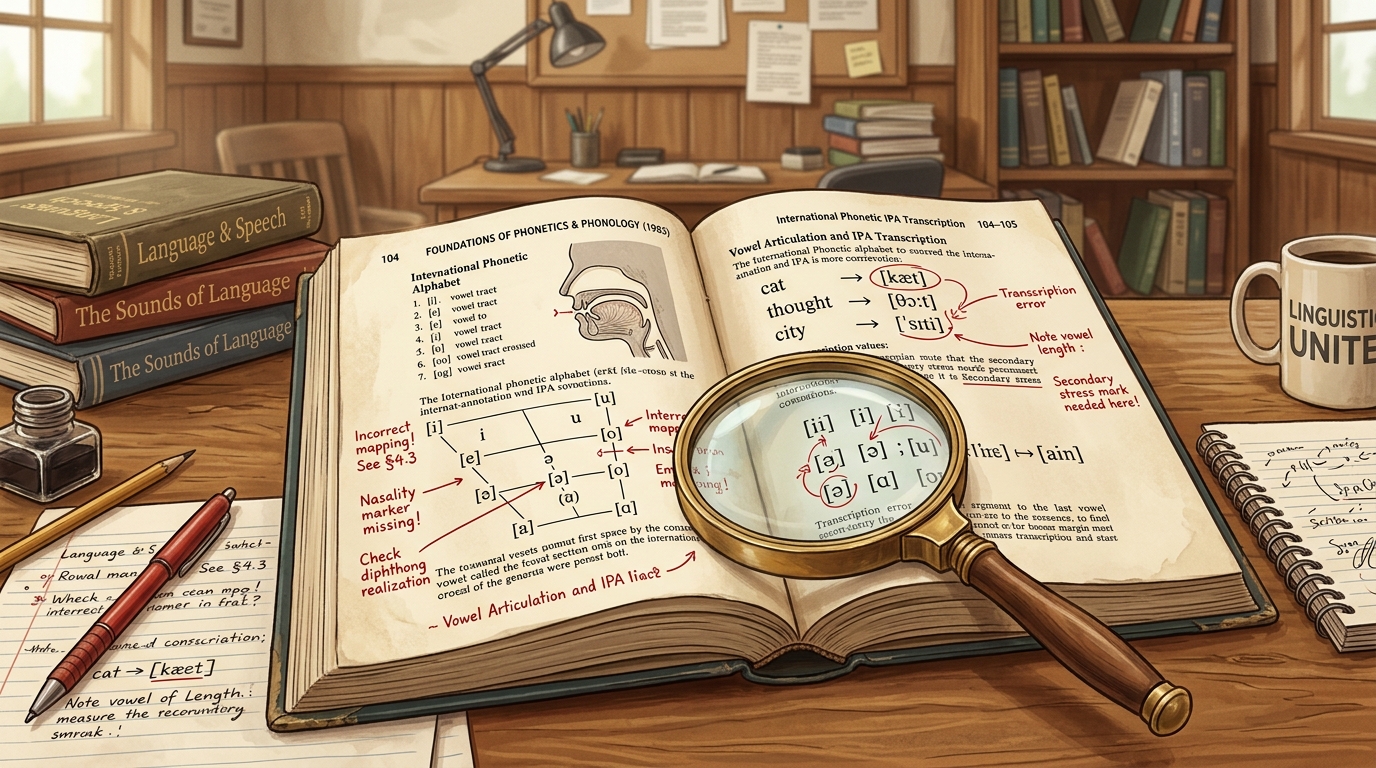
In linguistics, a minimal pair is a set of two words that differ by only a single phonological element (such as a single vowel or consonant sound), but have completely different meanings.
For non-native English speakers, minimal pair drills are the gold standard of articulatory muscle training. If your brain cannot reliably perceive or produce the micro-contrast between two adjacent phonemes, you will inevitably default to substituting a familiar sound from your mother tongue.
Here is a curated collection of the 50 most important minimal pairs in the English language, organized by phonological category.
1. Consonant Contrasts: The Most Problematic Pairs
Category A: /r/ vs. /l/ (Liquid Consonants)
- Key Mechanism: For /l/, the tip of your tongue touches the alveolar ridge behind your upper front teeth. For /r/, the tongue rolls back or bunches without touching the roof of the mouth.
- light /laɪt/ vs. right /raɪt/
- lead /liːd/ vs. read /riːd/
- alive /əˈlaɪv/ vs. arrive /əˈraɪv/
- collect /kəˈlekt/ vs. correct /kəˈrekt/
- belly /ˈbeli/ vs. berry /ˈberi/
Category B: /θ/ vs. /s/ vs. /f/ (Unvoiced Fricatives)
- Key Mechanism: For /θ/ (think), the tongue tip must sit lightly between the teeth. For /s/ (sink), the tongue stays behind closed teeth. For /f/ (fink), the upper teeth touch the lower lip.
- think /θɪŋk/ vs. sink /sɪŋk/
- thick /θɪk/ vs. sick /sɪk/
- thought /θɔːt/ vs. sought /sɔːt/
- path /pɑːθ/ vs. pass /pɑːs/
- three /θriː/ vs. free /friː/
Category C: /ð/ vs. /z/ vs. /d/ (Voiced Fricatives & Stops)
- Key Mechanism: /ð/ (this) requires voiced air between your teeth, whereas /z/ uses tongue pressure behind teeth, and /d/ uses a complete alveolar stop.
- then /ðen/ vs. den /den/
- they /ðeɪ/ vs. day /deɪ/
- breathe /briːð/ vs. breeze /briːz/
- clothe /kləʊð/ vs. close /kləʊz/
- worthy /ˈwɜːði/ vs. wordy /ˈwɜːdi/
Category D: /v/ vs. /w/ (Labiodental vs. Bilabial Approximants)
- Key Mechanism: For /v/, your top teeth press against your bottom lip with vocal cord vibration. For /w/, both lips round into a tight circle without touching teeth.
- vine /vaɪn/ vs. wine /waɪn/
- vest /vest/ vs. west /west/
- vow /vaʊ/ vs. wow /waʊ/
- vent /vent/ vs. went /went/
- viper /ˈvaɪpə/ vs. wiper /ˈwaɪpə/
Category E: /b/ vs. /v/ (Bilabial Stop vs. Labiodental Fricative)
- Key Mechanism: /b/ completely seals both lips before exploding air. /v/ allows continuous voiced friction between top teeth and bottom lip.
- berry /ˈberi/ vs. very /ˈveri/
- ban /bæn/ vs. van /væn/
- boat /bəʊt/ vs. vote /vəʊt/
- base /beɪs/ vs. vase /veɪs/
- best /best/ vs. vest /vest/
Category F: /p/ vs. /b/ (Voiceless vs. Voiced Bilabial Plosives)
- pin /pɪn/ vs. bin /bɪn/
- pack /pæk/ vs. back /bæk/
- price /praɪs/ vs. brace /breɪs/
- rope /rəʊp/ vs. robe /rəʊb/
- cap /kæp/ vs. cab /kæb/
2. Vowel Contrasts: Tense vs. Lax and Low vs. High
Category G: /iː/ vs. /ɪ/ (FLEECE vs. KIT)
- sheep /ʃiːp/ vs. ship /ʃɪp/
- feet /fiːt/ vs. fit /fɪt/
- seat /siːt/ vs. sit /sɪt/
- leave /liːv/ vs. live /lɪv/
- reach /riːtʃ/ vs. rich /rɪtʃ/
Category H: /uː/ vs. /ʊ/ (GOOSE vs. FOOT)
- pool /puːl/ vs. pull /pʊl/
- fool /fuːl/ vs. full /fʊl/
- suit /suːt/ vs. soot /sʊt/
- luke /luːk/ vs. look /lʊk/
- stewed /stjuːd/ vs. stood /stʊd/
Category I: /æ/ vs. /e/ (TRAP vs. DRESS)
- bad /bæd/ vs. bed /bed/
- man /mæn/ vs. men /men/
- pan /pæn/ vs. pen /pen/
- flash /flæʃ/ vs. flesh /fleʃ/
- pat /pæt/ vs. pet /pet/
Category J: /ʌ/ vs. /ɑː/ or /ɒ/ (STRUT vs. LOT)
- cut /kʌt/ vs. cot /kɒt/
- nut /nʌt/ vs. not /nɒt/
- cup /kʌp/ vs. cop /kɒp/
- hut /hʌt/ vs. hot /hɒt/
- duck /dʌk/ vs. dock /dɒk/
3. How to Practice Minimal Pairs Effectively
To build lasting motor automaticity:
- Step 1 - Discrimination: Have a partner or native recording play one of the two words. Test whether your ear can identify the difference without seeing the text.
- Step 2 - Alternating Repetitions: Say both words back-to-back 5 times ("sheep - ship - sheep - ship"), feeling the exact shift in tongue position.
- Step 3 - Contrastive Sentences: Use both words in a single sentence:
- "The sheep climbed onto the ship."
- "I read the book while you took the lead."
- Step 4 - AI Verification: Record your speech on Accent Test to verify that our acoustic model recognizes both phonemes distinctly!
The Accent Test editorial team creates evidence-based guides on English phonetics, pronunciation, and intelligibility, referencing the International Phonetic Alphabet (IPA), CEFR benchmarks, and applied phonology research.
Ready to Benchmark Your English Accent?
Record a short audio sample to get an instant acoustic analysis of your vowel formants, rhythm stress-timing, and clarity score.
Take the Accent Test