5 Common Pronunciation Mistakes Exposed by AI Accent Tests (And How to Fix Them with IPA)
Discover the top 5 phonetic traps detected during acoustic speech testing—including tense/lax vowel mergers, misplaced lexical stress, and consonant cluster reductions.
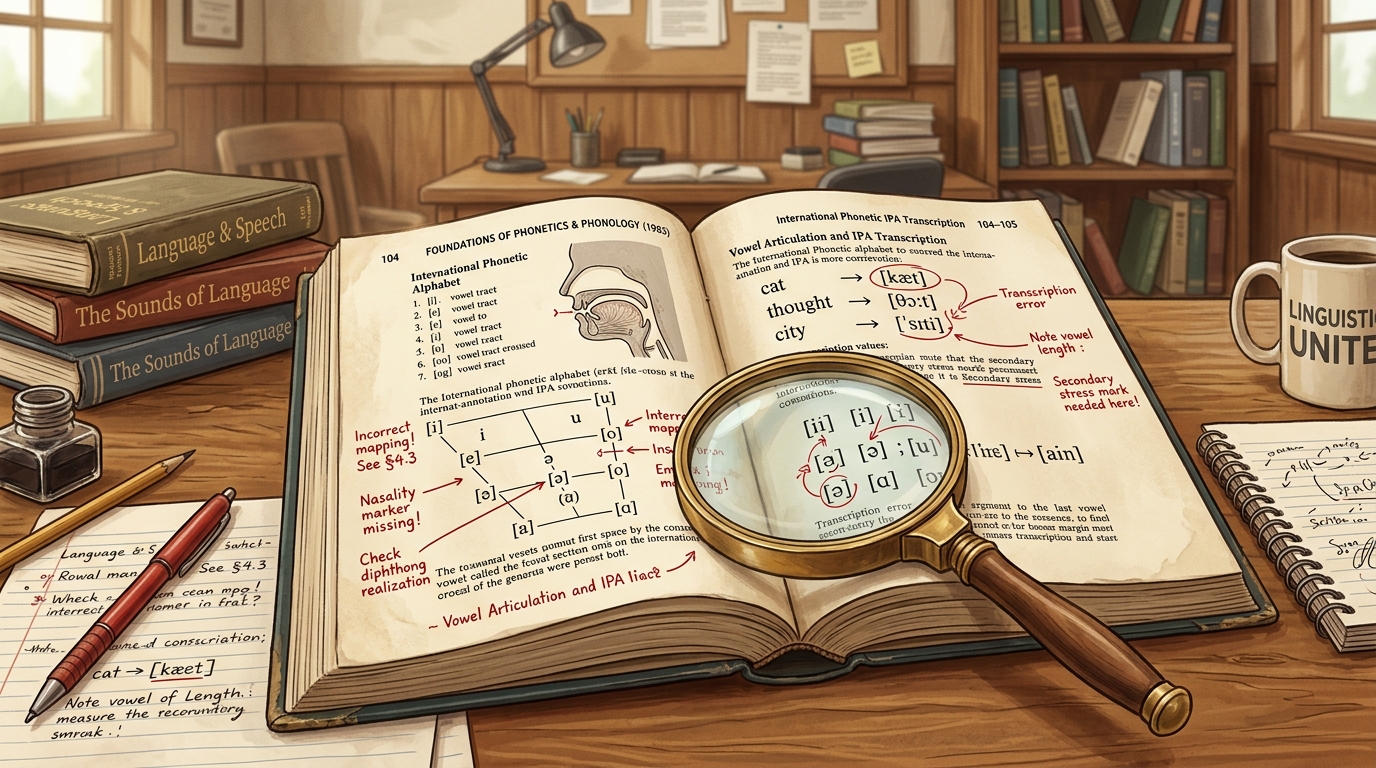
In applied linguistics and English language education, acoustic phonetics research shows that non-native speakers consistently encounter predictable phonetic challenges. When learners analyze their voice using AI diagnostic tools like Accent Test, these subtle vowel, consonant, and rhythm deviations are quickly highlighted.
These mistakes are not random slips; they are well-documented manifestations of first-language (L1) phonetic interference observed across global ESL learners.
In this comprehensive guide, we break down the 5 most frequent pronunciation mistakes detected by AI speech analysis, explain the underlying acoustic mechanisms using the International Phonetic Alphabet (IPA), and provide actionable minimal pair drills to eliminate them permanently.
1. Merging Tense and Lax Vowel Pairs
The single most common error among ESL speakers is failing to distinguish between tense (long) and lax (short) vowels. In many world languages (such as Spanish, Japanese, and Italian), vowel systems contain only 5 pure vowels without tense/lax contrasts.
In English, however, vowel meaning depends directly on tongue height, muscular tension, and duration:
Core Tense/Lax Contrast Pairs:
| Vowel Contrast | Tense (Long / Tense Muscle) | Lax (Short / Relaxed Jaw) | Critical Minimal Pair |
|---|---|---|---|
| /iː/ vs. /ɪ/ | /ʃiːp/ (sheep), /liːv/ (leave) | /ʃɪp/ (ship), /lɪv/ (live) | "Don't leave the room." vs. "Don't live the room." |
| /uː/ vs. /ʊ/ | /puːl/ (pool), /fuːl/ (fool) | /pʊl/ (pull), /fʊl/ (full) | "The pool is deep." vs. "The pull is deep." |
| /e/ vs. /æ/ | /bɛd/ (bed), /pɛn/ (pen) | /bæd/ (bad), /pæn/ (pan) | "That was a bad decision." vs. "That was a bed decision." |
| /ɔː/ vs. /ɒ/ | /kɔːt/ (caught/court) | /kɒt/ (cot) | /ˈwɔːtər/ vs. /ˈwɒtər/ |
How to Fix:
- For /iː/, spread your lips widely and tense the tongue muscle. For /ɪ/, drop your jaw slightly and relax your facial muscles.
- Hold tense vowels approximately 1.5 times longer than lax vowels in open syllables.
2. Misplacing Lexical Word Stress and Neutralizing Syllables
English is a stress-timed language. Native listeners identify words primarily by recognizing the stressed vowel, not by hearing every single letter. Placing stress on the wrong syllable alters word recognition and strains listener comprehension.
Noun vs. Verb Stress Shifts:
| Word Base | Noun Form (Stress on 1st Syllable) | Verb Form (Stress on 2nd Syllable) |
|---|---|---|
| Record | /ˈrɛk.ɔːd/ ("Listen to this RE-cord.") | /rɪˈkɔːd/ ("Please re-CORD the meeting.") |
| Present | /ˈprɛz.ənt/ ("A birthday PRE-sent.") | /prɪˈzɛnt/ ("She will pre-SENT the data.") |
| Progress | /ˈprəʊ.ɡrɛs/ ("We made great PRO-gress.") | /prəˈɡrɛs/ ("Projects will pro-GRESS rapidly.") |
| Object | /ˈɒb.dʒɪkt/ ("An unidentified OB-ject.") | /əbˈdʒɛkt/ ("I must ob-JECT to the terms.") |
How to Fix:
- When learning multi-syllabic words, always memorize the stress mark (/ˈ/).
- Make the stressed syllable longer in duration, higher in pitch, and noticeably clearer than adjacent syllables.
3. Dropping Word-Final Consonant Clusters
English allows up to three or four consonants to cluster at the end of a syllable (-sts, -sks, -pt, -kt, -ld). Because languages like Mandarin, Japanese, and Spanish strictly limit final consonants, learners often drop the final stop or add an unwanted vowel (epenthesis).
Common Cluster Traps:
| Consonant Cluster | Correct IPA Transcription | Common Mistake (Dropped Sound) | Impact on Meaning |
|---|---|---|---|
| -sts | /tɛsts/ (tests) | /tɛs/ (tess) | Plurality marker is lost |
| -sks | /tɑːsks/ (tasks) | /tɑːs/ (tass) | Grammatical noun confusion |
| -pt | /əkˈsɛptɪd/ (accepted) | /əkˈsɛp/ | Past tense -ed marker omitted |
| -kt | /ˈprɒd.ʌkt/ (product) | /ˈprɒd.ʌk/ | Incomplete word enunciation |
| -ld | /wɜːld/ (world) | /wɜːl/ (were/whirl) | Misinterpreted as another word |
How to Fix:
- Slow down your transition between words. Articulate both sounds in the cluster cleanly before initiating the next vowel.
4. Dental Fricative Substitution (/θ/ and /ð/)
The dental fricatives /θ/ (unvoiced, as in think) and /ð/ (voiced, as in this) occur in fewer than 10% of world languages. Speakers frequently substitute them with familiar native sounds:
| Target Sound | Target IPA | Common Substitution | Example Mispronunciation |
|---|---|---|---|
| /θ/ | /θɪŋk/ (think) | Substituted with /s/ or /t/ | "I sink so." or "I tink so." |
| /θ/ | /θriː/ (three) | Substituted with /f/ or /t/ | "Free apples." or "Tree apples." |
| /ð/ | /ðɪs/ (this) | Substituted with /d/ or /z/ | "Look at dis." or "Look at zis." |
| /ð/ | /bætʃ/ vs. /beɪð/ (bathe) | Substituted with /z/ | "Baze in the sun." |
How to Fix:
- Place the tip of your tongue gently between your upper and lower front teeth.
- For /θ/, blow unvoiced air continuously across the tongue surface. For /ð/, maintain the same position while vibrating your vocal cords.
5. Equal Syllable Timing & Ignoring the Schwa (/ə/)
In syllable-timed languages (e.g., Spanish, French, Cantonese), every syllable receives roughly equal duration. Applying this pattern to English makes speech sound staccato, rigid, and exhausting for listeners.
English relies on reducing non-stressed vowels to the neutral central vowel schwa (/ə/):
Unreduced (Robotic):  /kæn juː kʌm tuː ðə miːtɪŋ/    (Can you come to the meeting?)
Natural (Stress-Timed): /kən jə kʌm tə ðə ˈmiːtɪŋ/
High-Frequency Words That Require Schwa:
- to: /tuː/ (strong) → /tə/ (weak: "Go to bed")
- for: /fɔːr/ (strong) → /fər/ (weak: "Ready for work")
- and: /ænd/ (strong) → /ənd/ or /ən/ (weak: "Bread and butter")
- of: /ɒv/ (strong) → /əv/ (weak: "Cup of tea")
6. Diagnostic Benchmark: Pinpoint Your Pronunciation Patterns
Eliminating pronunciation errors requires clear acoustic feedback. Take our free Accent Test to analyze your spoken English in real time and discover exactly which phonemes and stress patterns to prioritize in your daily practice!
The Accent Test editorial team creates evidence-based guides on English phonetics, pronunciation, and intelligibility, referencing the International Phonetic Alphabet (IPA), CEFR benchmarks, and applied phonology research.
Ready to Benchmark Your English Accent?
Record a short audio sample to get an instant acoustic analysis of your vowel formants, rhythm stress-timing, and clarity score.
Take the Accent Test